



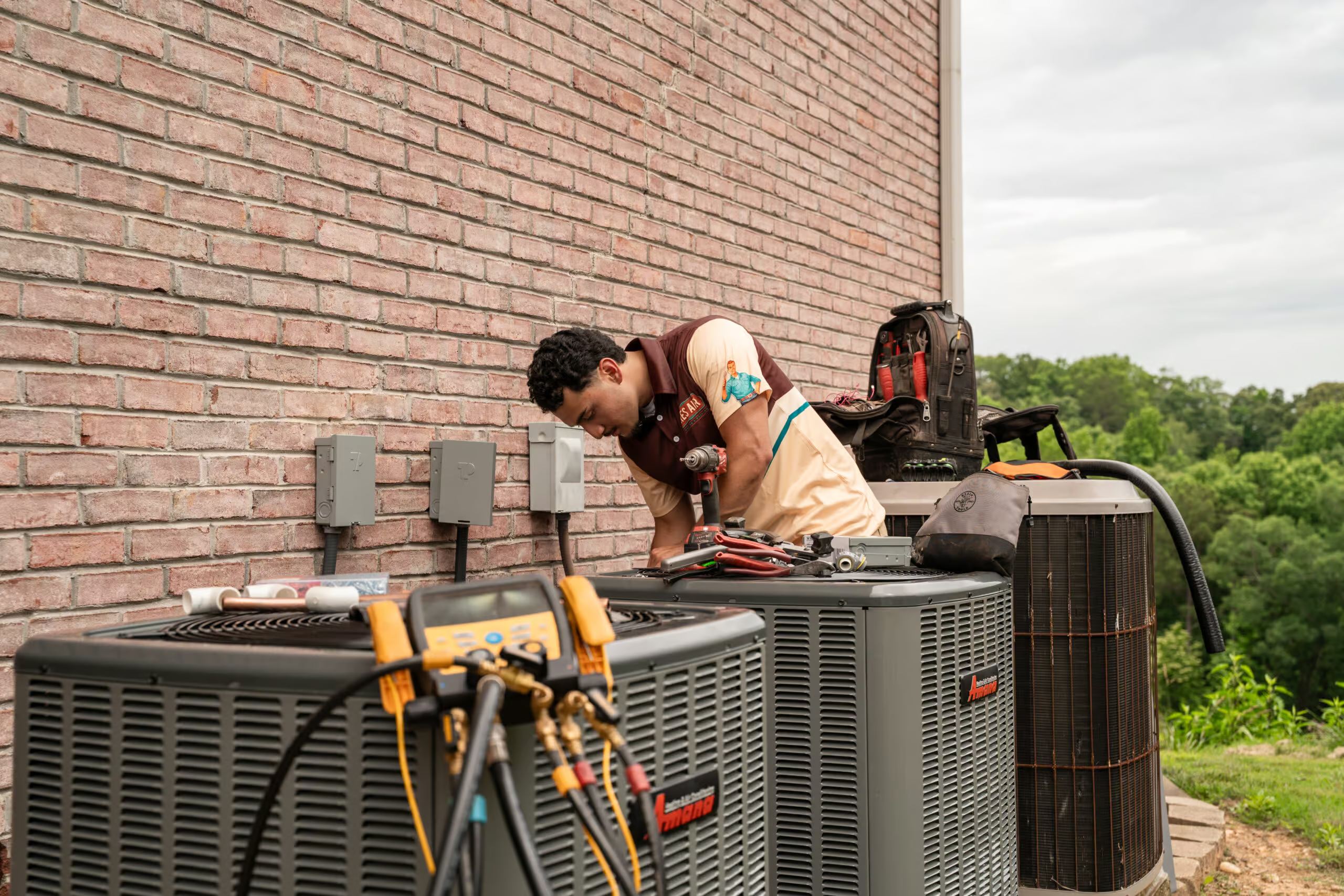
A system that used to keep every room comfortable suddenly falling behind across the whole house points to something other than a single blocked vent somewhere. When a homeowner says the AC not cooling properly anywhere in the house, not just one room, the cause usually sits closer to the equipment itself than to the ductwork feeding individual rooms. Refrigerant charge, compressor performance, and airflow across the indoor coil all affect the entire system at once, unlike a duct problem that typically only shortchanges one or two rooms. Figuring out which of those is actually failing takes a bit of process of elimination, starting with the easiest checks and working toward the ones that need a gauge set and actual diagnostic equipment. None of it requires a technician standing there for hours. Most of it takes minutes once someone knows what to actually look at.
1. When the Whole House Runs Warm at Once
A refrigerant charge that’s dropped even modestly reduces the system’s total cooling capacity across every room it serves, not just the ones farthest from the unit. Compressors nearing the end of their service life lose efficiency gradually, so the whole house cools less effectively over months rather than all at once. A dirty evaporator coil restricts heat transfer at the point where cooling actually happens, and that loss affects the entire airflow leaving the unit, not one branch of ductwork. Outdoor condenser coils clogged with debris or grass clippings force the whole system to work harder just to reject heat properly. Any one of these can drag comfort down house wide, which is exactly why whole house problems point somewhere different than room specific ones. A technician with a set of refrigerant gauges can usually narrow the list down to one or two likely causes within the first fifteen minutes of a visit.
2. Recognizing a Problem Before It Turns Into a No-Cool Call
Common AC repair issues rarely start as a complete system failure. They start small, as a slightly longer runtime, a system that cycles a little more often than it used to, or air coming from the vents that’s a few degrees warmer than it should be. Catching these early usually means a straightforward repair, like recharging refrigerant to spec or replacing a weak capacitor before it fails outright. Waiting until the system stops cooling entirely often means a bigger repair, since a struggling compressor working under stress for months tends to fail harder than one caught early. A seasonal checkup before the heaviest cooling months tends to catch most of this before it becomes an emergency. A twenty minute inspection in spring beats a same day dispatch fee in the middle of a heat wave every time.
3. Reading the Warning Signs Most People Miss
Some of the clearest signs your AC needs repair are auditory rather than visual, like a compressor that hums louder than usual or a fan that rattles slightly on startup. Ice forming on the refrigerant line or the indoor coil is another sign that often gets misread as a good thing, when it actually points to restricted airflow or low refrigerant. A system that runs constantly without ever reaching the thermostat setting is struggling with something, whether that’s capacity loss or a sensor reading incorrectly. Higher humidity indoors than usual, even with the AC running, often means the system’s removing less moisture than it should, a sign that something upstream is already off. None of these signs guarantee a specific diagnosis on their own, but a technician hearing two or three of them together usually has a strong idea before ever opening the unit.
4. Working Through It Systematically Instead of Guessing
- Check the basics first. Thermostat settings, breaker position, and filter condition rule out the simplest explanations before anything more involved gets diagnosed.
- Look at the outdoor unit. A condenser buried in leaves or grass clippings can't reject heat properly, and clearing it sometimes solves the whole problem on its own.
- Know when it's an emergency AC repair situation. A system that's stopped cooling entirely during extreme heat, especially with vulnerable household members present, needs same day attention rather than waiting.
A basic AC troubleshooting guide like this rules out the easy fixes before anyone calls in a technician for something that might not need one.
5. What Determines the Final Number on the Invoice
- Part availability. A common capacitor or contactor costs far less and installs faster than a compressor that needs to be special ordered.
- System age. Parts for older equipment sometimes cost more simply because they're harder to source than components for anything currently in production.
- Timing. Weekend or after-hours calls typically carry a premium compared to a repair scheduled during regular business hours.
Among the clearest AC repair cost factors is how early the problem gets caught, since preventing AC breakdowns through routine maintenance almost always costs less than an emergency repair down the line.
Conclusion
A house that cools unevenly across the whole space, rather than just in one room, usually points back to the equipment itself instead of the ductwork feeding it. Refrigerant levels, compressor health, and coil condition all affect the system as a whole, which is why the fix tends to look different than a duct repair or a blocked vent. Res Air Heating and Cooling walks homeowners through exactly which of these is actually happening before recommending any repair, rather than guessing at the cause. Catching the problem early usually means a smaller repair and a system that keeps running reliably for years afterward. Waiting until the whole house stops cooling almost always costs more than addressing the warning signs when they first show up. A little attention early usually settles the whole question before it turns into an afternoon spent waiting for a technician.
Air Conditioning services
AC not keeping up anymore? Res Air Heating and Cooling can find out why. Call 770-902-3787 today.
FAQs
Frequently Asked Questions
- Need Help Right Now?
Our team is available 24/7 to answer your questions and schedule fast service.
Why is my whole house not cooling evenly?
It usually points to something affecting the whole system at once, like low refrigerant, a failing compressor, or a dirty coil, rather than an issue with a single room or duct.
How much does it cost to fix an AC that's not cooling properly?
It depends heavily on the cause, since recharging refrigerant or replacing a capacitor costs considerably less than a compressor repair or replacement.
Is it an emergency if my AC stops cooling?
During extreme heat, especially with children, older adults, or pets in the house, a system that's stopped cooling completely is worth treating as urgent rather than waiting for a scheduled appointment.