


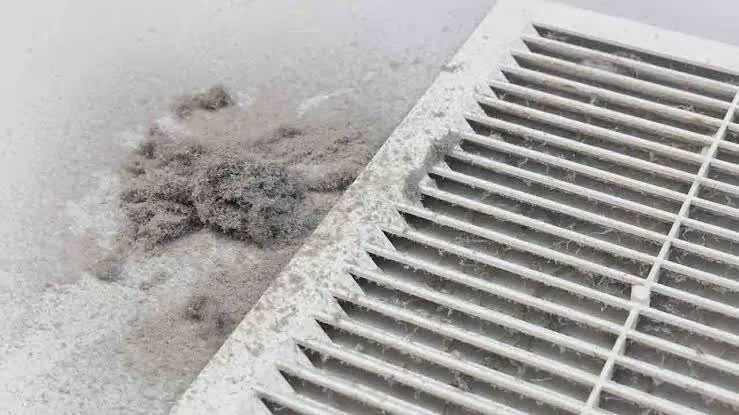
A system working overtime rarely announces itself with a warning light. It just runs longer, costs more, and wears down faster, which is exactly why the benefits of air duct cleaning tend to show up on a utility bill long before anyone thinks to check the ductwork itself. Dust and debris accumulate inside supply and return lines gradually, restricting airflow in ways that force the blower motor and compressor to work harder for the same result. Over months, that added strain shortens the lifespan of components that were never designed to fight constant resistance. Most homeowners never see the inside of a duct, so the connection between a dirty system and a rising bill often goes unnoticed until something actually fails. A blower motor rated to run for two decades doesn’t get there any faster just because it’s been fighting a partially blocked system the whole time.
1. How Restricted Airflow Quietly Raises Your Energy Bill
A blower motor pushing air through a duct clogged with years of dust has to work considerably harder than one moving through a clean, clear path. That extra effort translates directly into higher electricity draw, even though the thermostat setting never changed and the outdoor temperature stayed the same. Restricted airflow also means the system runs longer to reach the same setpoint, stacking runtime hours that show up clearly on a monthly statement. A duct that’s lost even a modest percentage of its airflow capacity can push energy costs up noticeably over a full season, sometimes more than homeowners expect from something they never see or think about. A technician measuring static pressure across the duct system can usually quantify the loss in a single visit, rather than leaving it as a guess.
2. Recognizing When Ducts Have Crossed the Line
Visible dust blowing out of a supply vent shortly after the system kicks on is one of the more obvious signs that air ducts need cleaning, though plenty of homes never get that dramatic warning. A musty smell that shows up specifically when the system’s running, rather than lingering all the time, often points to buildup inside the ducts rather than anywhere else in the house. Rooms that collect dust noticeably faster than others, despite regular cleaning, can indicate a duct system redistributing debris every time the blower cycles on. Allergy symptoms that flare indoors more than outdoors, especially right after the system starts a cycle, are worth paying attention to as well. None of these signs alone confirms the ducts are the culprit, but two or three showing up together usually is.
3. What Clean Ducts Actually Do for the Air You Breathe
- Fewer airborne particles. Removing built up dust and debris cuts down on what recirculates every time the blower runs, which is where most of the indoor air quality improvement homeowners notice actually comes from.
- Reduced odor circulation. Trapped particles inside ducts often carry smells that get pushed through the whole house repeatedly until the source gets physically removed.
- A clearer sense of timing. Duct cleaning frequency depends heavily on the house, since a home with pets, recent renovation work, or nearby construction accumulates buildup considerably faster than one without those factors.
None of this requires guesswork. A quick visual inspection of a supply register usually tells a technician most of what they need to know.
4. Contaminants That Build Up Where You Can't See Them
- Pest evidence. Rodents and insects sometimes find their way into duct runs, leaving behind debris that's unmistakable once a technician gets a camera inside.
- Moisture buildup. Condensation inside ducts, especially near the evaporator coil, creates conditions where mold in air ducts can take hold if it's never addressed.
- Persistent dust return. One of the more common dirty air duct symptoms is dust resettling within hours of cleaning a room, which points to a source that keeps redistributing itself.
A visual inspection with a camera typically settles the question quickly, without much guesswork involved. It’s a fifteen minute check that tends to answer questions homeowners have been wondering about for a while.
5. Why Equipment Lifespan Depends on More Than the Unit Itself
An air conditioner or furnace rated for fifteen to twenty years of service can fall well short of that if it’s been fighting restricted airflow the entire time. Among the clearest professional duct cleaning benefits is the reduced strain on a blower motor and compressor that no longer have to force air through a partially blocked system. Components running under less resistance simply wear more slowly, which stretches out the years before a major repair or replacement becomes necessary. Manufacturers design equipment assuming reasonably clean airflow conditions, not years of accumulated buildup working against every component constantly. Addressing the ductwork alongside routine equipment maintenance protects the investment in both directions at once. Skipping it means paying for the same repair cycle repeatedly, on equipment that was never actually the source of the strain.
Conclusion
Dirty ductwork rarely announces itself the way a broken part does, but the cost shows up anyway, in higher bills and shorter equipment life. Addressing it isn’t complicated, and it doesn’t require guessing at symptoms that might mean something else entirely. Res Air Heating and Cooling walks homeowners through what’s actually happening inside their ductwork before recommending anything, rather than assuming every home needs the same service on the same schedule. A system running with clear airflow tends to cost less to operate and lasts considerably longer than one working against itself year after year. That difference is usually worth the inspection alone, even before anything gets scheduled for a full cleaning.
Air Conditioning services
Worried about dirty ductwork? Res Air Heating and Cooling can inspect and clean it. Call 770-902-3787 today.
FAQs
Frequently Asked Questions
- Need Help Right Now?
Our team is available 24/7 to answer your questions and schedule fast service.
How often should air ducts be cleaned in Atlanta, GA?
Most homes do fine every three to five years, though pets, recent renovations, or nearby construction dust can shorten that window considerably.
Can dirty air ducts really raise energy bills in Atlanta, Georgia?
Yes, restricted airflow forces the system to run longer and work harder to reach the same temperature, and that added runtime shows up clearly on a monthly bill.
What are signs of mold in air ducts in Atlanta, GA?
A musty smell that appears specifically when the system runs, visible dark spots near vents, or unexplained allergy flare-ups indoors are all worth having a technician actually inspect.