

There’s nothing quite like that sinking feeling of walking into a warm house in the middle of July and realizing the AC has simply given up on you. Spotting the signs you need emergency AC repair in Gainesville, GA, early is often what stands between a quick fix and a long, sweaty, and expensive ordeal. The catch is that an air conditioner rarely dies without warning; it usually drops a few hints first, as long as you know what to listen and look for. Some of those hints are genuine emergencies that simply can’t wait until morning. Let’s go through the ones that should have you reaching for the phone instead of fiddling with the thermostat, and why each one matters.
1. When The Cool Air Turns Warm
Air coming from the vents that feels room temperature or warmer is one of the clearest signs something has gone seriously wrong. It can mean a refrigerant leak, a dead compressor, or a frozen coil, and in a Georgia heat wave, a house with no real cooling heats up dangerously fast. That’s a true emergency for anyone with little ones, elderly family, or pets at home. Indoor temperatures can reach unsafe levels in just a few hours during one of our hot spells. Running the system longer in that state usually just risks the compressor, which happens to be the priciest part you own. If the air has gone warm and the house keeps climbing, shut it off and call rather than letting it grind away for hours. A unit forced to run with no refrigerant can cook its own compressor in a single afternoon.
2. Sounds That Mean Trouble
- Grinding or screeching, often a failing motor bearing that can seize right up if you keep running it.
- Banging or clanking, usually a loose or broken part knocking around somewhere it shouldn't be.
- Loud buzzing, which frequently points to an electrical issue rather than the usual quiet hum.
- Rapid clicking that won't quit, a sign the system is fighting to start or has a control fault.
If the sound is sudden, loud, or just plain wrong, switch the unit off and get it looked at before that damage spreads any further. A bad bearing caught today is cheap, while the seized motor it becomes next week is not.
3. Smells You Should Never Ride Out
Your nose will often catch an emergency before anything else does. A hot, burning, or melting plastic smell usually means overheating wiring or a motor, and that’s a fire risk that warrants shutting the system down at the breaker right away. A sweet or chemical odor is a different but equally serious warning, often a refrigerant leak that needs a trained tech, not just an open window. Even a strong musty smell, while less urgent, can hint at mold growing somewhere inside the system. When in doubt, trust the smell, cut the power, and make the call. Your nose is rarely wrong about this, and the cost of being cautious is basically nothing.
4. Leaks, Drips, And Ice Around The Unit
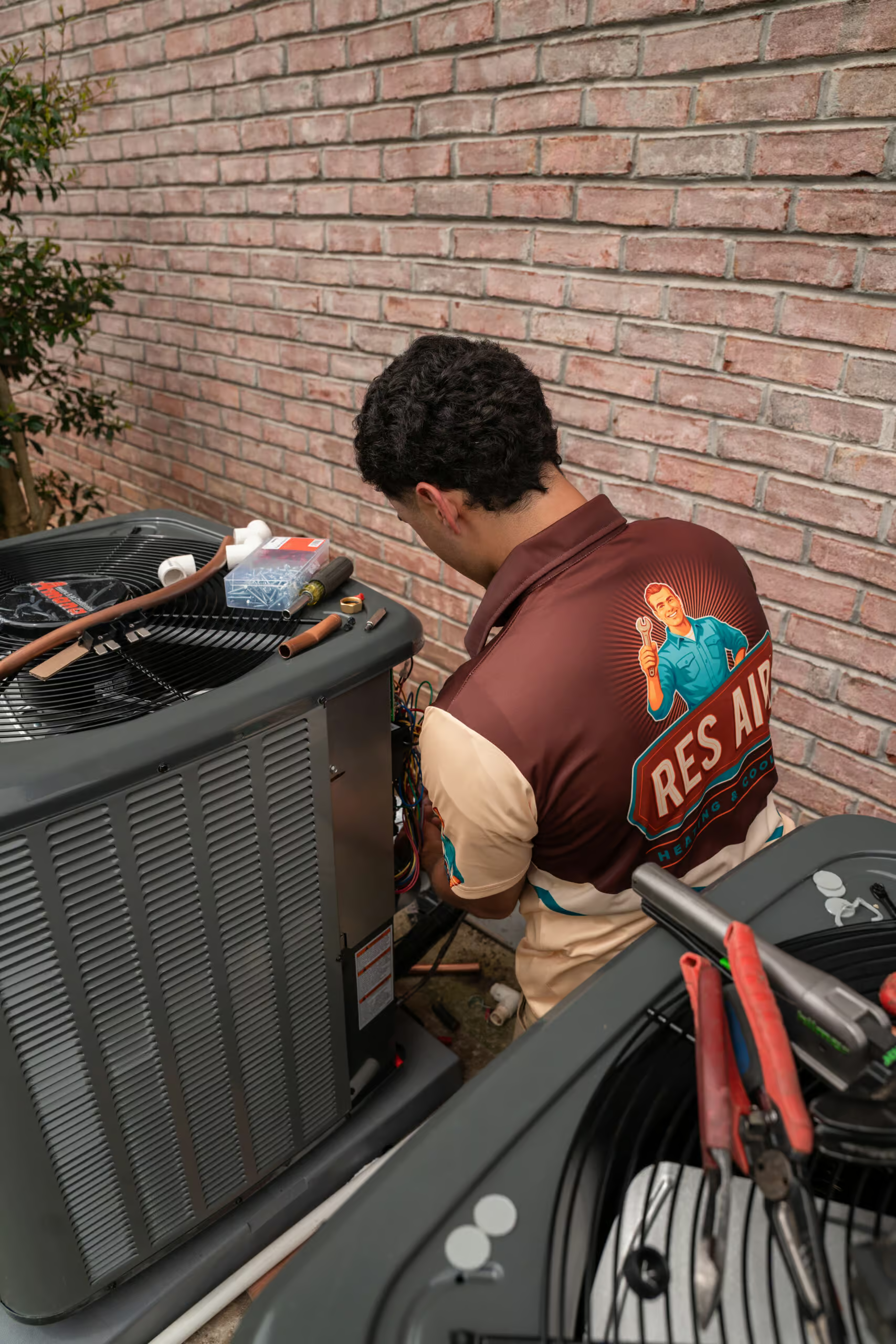
Water pooling or ice forming around your system is never something to mop up and quietly forget about. A clogged condensate drain, which fills up fast in our humidity, can overflow and damage floors, drywall, and the unit’s own electronics. Ice on the refrigerant lines or coil means the system is struggling and should be shut off before things get any worse. This is exactly the sort of thing prompt central air conditioning services in Gainesville, GA, can sort out before a small leak turns into a big repair. If you spot water anywhere near electrical components, treat it as urgent and get help fast. Left alone, a slow leak can quietly rot a subfloor or short out a board long before you notice the puddle.
5. What's Different About Newer Systems
- An automatic shutdown, since the sensor can cut the system off the instant it detects a leak.
- The fan running on its own, a built in response designed to clear refrigerant out of the air.
- A fault code or alarm, instead of the silent breakdown older systems tended to give you.
- A chemical smell alongside any of that, which on a new unit almost always means refrigerant.
Don’t just keep resetting a system that behaves this way, call a tech trained on A2L equipment to track down the leak safely. These sensors are doing their job when they trip, so the smart move is to listen to them.
Most AC emergencies will give you a warning if you’re paying attention, warm air in a heat wave, an awful noise, a burning or chemical smell, water and ice where they don’t belong, or a newer system tripping its own sensor. Whichever one shows up, the right response is the same, shut it down and call before it grows into something bigger or unsafe. Acting fast almost always means a smaller repair and a whole lot less misery in the heat.
That’s where Res Air Heating and Cooling comes in, a locally owned team that picks up around the clock for neighbors all over Gainesville, GA. The moment your AC starts sending these signals, reach out, and we’ll take it from there. Catching it early is almost always the difference between a quick visit and a rough week.
Air Conditioning services
AC quit or acting scary? Call us, Res Air Heating and Cooling, at 770-902-3787 for round the clock AC repair.
FAQs
Frequently Asked Questions
- Need Help Right Now?
Our team is available 24/7 to answer your questions and schedule fast service.
How fast can I get emergency AC repair in Gainesville, GA?
Because we're locally based and answer the phone around the clock, emergency calls in Gainesville, GA get a fast response. The sooner you call when something seems wrong, the better the odds of a simple fix.
Is it safe to keep running my AC if it's making a loud noise?
No. A sudden grinding, banging, or buzzing noise can mean a failing part, and running it can turn a repair into a replacement. Shut it off and have it checked, anywhere around Gainesville, GA.
Why does my newer AC keep shutting itself off in 2026?
Newer A2L systems have leak detection sensors that shut the unit down and run the fan when they sense a refrigerant leak. If your Gainesville, GA system does this, don't keep resetting it, call a technician trained on A2L units.